
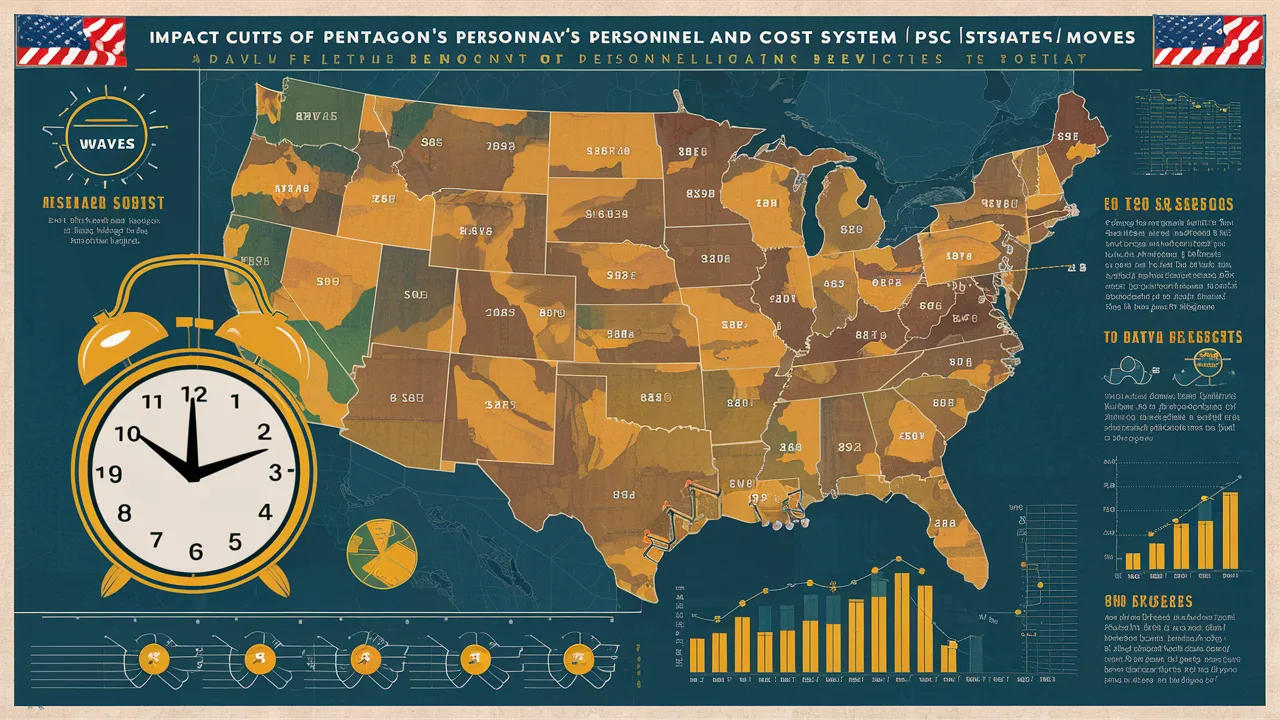
Budget decisions within the defense sector often have wide-reaching consequences for military personnel and their families. One of the most significant areas affected by financial adjustments in recent years is the system of Permanent Change of Station (PCS) moves, which are relocations ordered by the military for service members to new duty stations. Managed under the authority of the United States Department of Defense, PCS moves are essential for operational readiness, career progression, and global force deployment. However, as budget pressures increase and cost-control measures become a priority, PCS-related funding has come under scrutiny. We explore how Pentagon PCS moves budget cuts are shaping policies, affecting military families, and influencing the future of relocation support systems.
What Are PCS Moves in the Military?
PCS moves, or Permanent Change of Station moves, are official relocations assigned to military personnel when they are transferred from one base to another. These moves are not optional and are a core part of military service structure. They often involve relocating across states or even internationally, depending on operational needs.
PCS moves typically include government-funded transportation, moving services, temporary lodging allowances, and housing assistance. The system is designed to ensure that service members can transition smoothly without bearing the full financial burden of relocation. However, rising costs have forced policymakers to reassess how these moves are funded and managed.
Why Pentagon Budget Cuts Are Affecting PCS Moves
The Pentagon PCS moves budget cuts are largely driven by the need to optimize defense spending while maintaining operational readiness. As global military commitments expand, the cost of moving personnel and equipment has increased significantly.
Relocation expenses include:
- Transportation of household goods
- Temporary housing and lodging allowances
- Travel costs for families
- Administrative relocation support
When multiplied across hundreds of thousands of annual moves, PCS costs represent a substantial portion of the defense budget. As a result, policymakers within the United States Department of Defense are exploring ways to reduce expenses without compromising mission effectiveness.
Key Areas Impacted by PCS Budget Cuts
Budget reductions have led to changes in several important areas of the PCS system. These include financial allowances, relocation timelines, and support services.
1. Reduced Relocation Allowances
Service members may experience adjustments in reimbursement rates for travel, lodging, and shipment of household goods. This can increase out-of-pocket costs in certain situations.
2. Stricter Eligibility Rules
Some PCS benefits may become more targeted, prioritizing essential relocations while limiting discretionary moves.
3. Changes in Housing Assistance
Temporary lodging and housing support programs may be adjusted, impacting families during transition periods.
4. Increased Use of Cost-Efficient Contractors
The military may shift toward more competitive contracting systems to reduce moving expenses.
These changes are designed to control costs while preserving essential mobility for military operations.
How PCS Budget Cuts Affect Military Families
Military families are often the most directly impacted by Pentagon PCS moves budget cuts. Relocation is already a stressful process, and financial reductions can add additional challenges.
Common effects include:
- Higher personal expenses during relocation
- Increased planning and logistical burden
- Uncertainty regarding reimbursement timelines
- Emotional stress due to disrupted family routines
Children’s schooling, spousal employment, and housing stability are often disrupted during PCS transitions. Budget constraints can make these challenges more difficult to manage.
Operational Reasons Behind PCS Cost Reductions
While budget cuts may seem restrictive, they are often implemented to improve efficiency across the military system. The goal is not to eliminate PCS moves but to optimize them.
Key operational reasons include:
- Reducing administrative overhead
- Streamlining relocation logistics
- Prioritizing mission-critical deployments
- Allocating funds to modernization and defense technology
In many cases, savings from PCS reductions are redirected toward training, equipment upgrades, and strategic readiness initiatives.
Long-Term Outlook for PCS Policies
The future of PCS moves is likely to evolve as technology and policy reforms reshape military logistics. Digital systems are being introduced to streamline relocation management, improve tracking, and reduce inefficiencies.
Potential future developments include:
- Increased automation in relocation processing
- Expanded digital reimbursement systems
- Greater flexibility in assignment locations
- Enhanced support programs for families
These changes aim to balance cost efficiency with the welfare of service members.
Balancing Cost Control and Military Readiness
A critical challenge facing the United States Department of Defense is maintaining operational readiness while managing budget limitations. PCS moves are essential for deploying skilled personnel where they are needed most, but they must also be financially sustainable.
Finding this balance requires careful planning, data analysis, and policy adjustments. Leaders must ensure that cost reductions do not negatively impact morale, family stability, or mission success.
Strategies for Service Members to Adapt to PCS Changes
Military personnel can take proactive steps to manage the effects of PCS budget adjustments:
- Plan relocations early to reduce last-minute costs
- Track all expenses for accurate reimbursement claims
- Use official military relocation resources
- Seek financial counseling services when needed
- Stay informed about policy updates
These strategies help minimize stress and financial pressure during transitions.
Conclusion
The issue of Pentagon PCS moves budget cuts reflects a broader effort to balance fiscal responsibility with military readiness. While adjustments to relocation funding may create challenges for service members and their families, they also encourage more efficient systems and smarter resource allocation. Under the guidance of the United States Department of Defense, PCS policies continue to evolve toward greater efficiency and modernization. By understanding these changes and preparing accordingly, military families can better navigate relocations and maintain stability during periods of transition.
Frequently Asked Questions (FAQ)
1. What does PCS mean in the military?
PCS stands for Permanent Change of Station, a mandatory relocation of military personnel.
2. Why are PCS moves affected by budget cuts?
Because relocation costs are high, and the military aims to optimize spending and efficiency.
3. Who manages PCS policies?
The United States Department of Defense oversees PCS regulations and funding.
4. Do PCS budget cuts affect all service members?
Impacts vary depending on rank, location, and type of assignment.
5. Will PCS moves be eliminated in the future?
No, PCS moves are essential for military operations, but policies may become more cost-efficient.
