
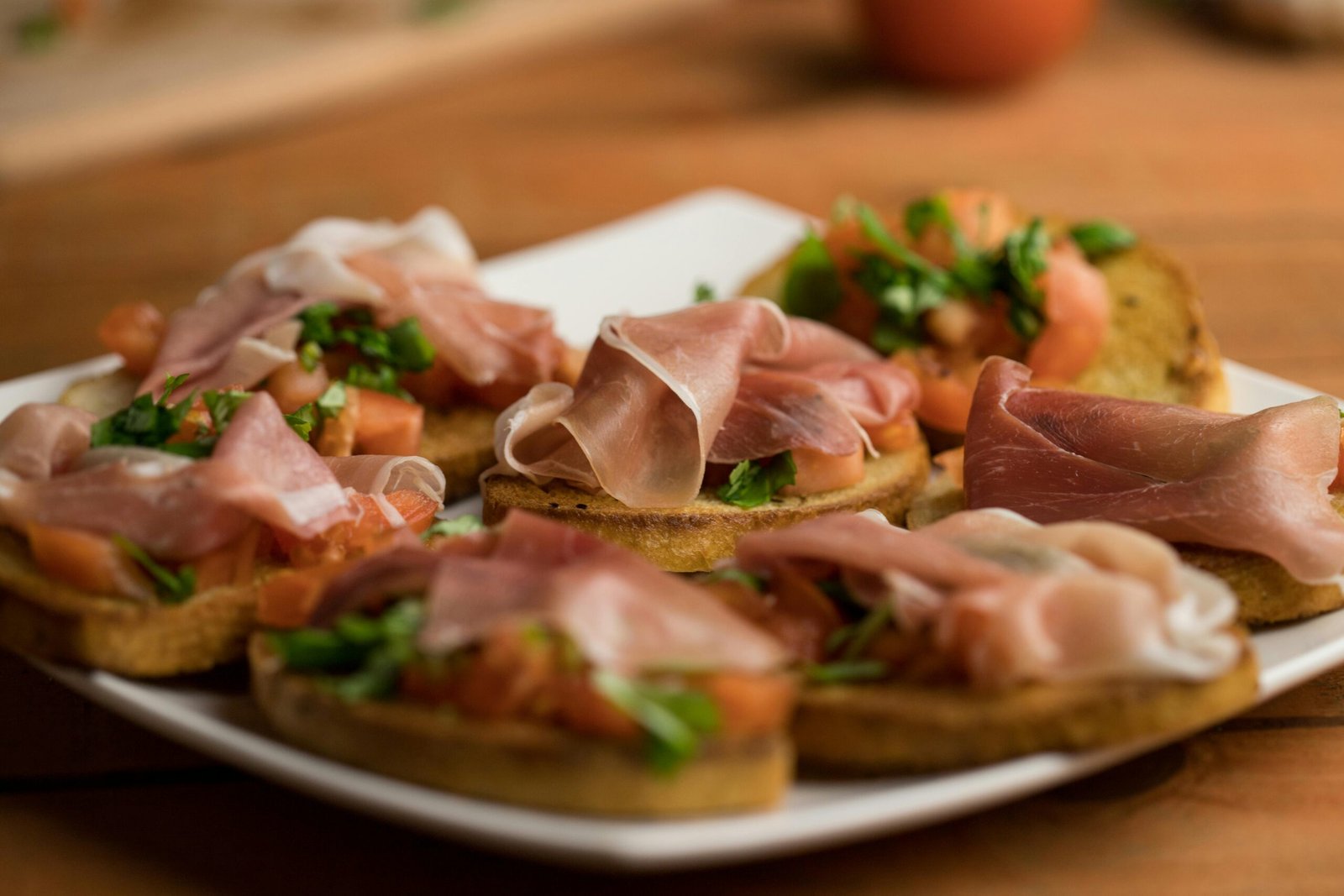
Prosciutto is one of the most celebrated delicacies in the world of gastronomy, renowned for its delicate texture, rich flavor, and centuries-old tradition. Originating in Italy, this dry-cured ham represents the pinnacle of artisanal food craftsmanship, combining simple ingredients with time-honored techniques. We explore the origins, varieties, production process, culinary uses, and nutritional aspects of prosciutto in a deeply detailed and comprehensive manner. Whether enjoyed on its own or paired with complementary ingredients, prosciutto offers a unique sensory experience that continues to captivate food lovers worldwide.
What is Prosciutto? Understanding the Basics
Prosciutto is a type of dry-cured ham made from the hind leg of a pig, carefully salted and aged over an extended period. Unlike cooked ham, prosciutto is served raw but cured, which gives it its signature flavor and texture.
The curing process involves minimal ingredients—typically just pork and salt—allowing the natural flavors to develop over time. This simplicity is what makes prosciutto a standout ingredient, as every slice reflects the quality of the meat and the precision of the curing process.
Types of Prosciutto
1. Prosciutto Crudo
This is the most well-known variety, referring to raw, dry-cured ham. It is aged for months or even years, resulting in a sweet, savory, and slightly nutty flavor.
2. Prosciutto Cotto
Unlike crudo, prosciutto cotto is cooked ham, offering a milder taste and softer texture.
3. Regional Varieties
Different regions in Italy produce distinct types of prosciutto, such as:
- Prosciutto di Parma – Known for its delicate sweetness and smooth texture
- Prosciutto di San Daniele – Recognized for its slightly darker color and richer flavor
Each variety reflects the local climate, traditions, and production techniques, making every type unique.
How Prosciutto is Made
The production of prosciutto is a meticulous process that requires time, expertise, and strict quality control.
Selection of Meat
Only high-quality pork legs are chosen, ensuring optimal texture and flavor.
Salting Process
The meat is covered in salt to draw out moisture and preserve the ham naturally.
Resting Period
After salting, the ham is left to rest, allowing the salt to penetrate evenly.
Aging
The most critical stage involves aging the ham for several months to years, during which it develops its distinctive aroma and taste.
Final Preparation
Before being sold, the prosciutto is carefully inspected and prepared for slicing.
Flavor Profile and Texture
The flavor of prosciutto is a harmonious blend of sweetness, saltiness, and umami richness. Its texture is thin, tender, and melt-in-your-mouth, making it a luxurious addition to any dish.
The aging process enhances these qualities, creating a product that is both complex and balanced. Each bite delivers a refined and satisfying experience, making prosciutto a favorite among chefs and food enthusiasts.
How to Serve Prosciutto
Classic Pairings
Prosciutto is often paired with simple ingredients that enhance its flavor:
- Fresh fruits like melon or figs
- Soft cheeses such as mozzarella
- Crusty bread or focaccia
In Recipes
It can be used in a variety of dishes, including:
- Pasta and risotto
- Salads
- Pizza and sandwiches
Serving Tips
For the best experience, prosciutto should be sliced thinly and served at room temperature, allowing its flavors to fully develop.
Nutritional Value of Prosciutto
Prosciutto offers several nutritional benefits when consumed in moderation:
- High in protein, supporting muscle development
- Contains essential vitamins and minerals
- Relatively low in carbohydrates
However, it is also high in sodium, so it should be enjoyed as part of a balanced diet.
Why Prosciutto is a Gourmet Favorite
The enduring popularity of prosciutto lies in its combination of simplicity and sophistication. Its production relies on traditional methods, yet its flavor rivals the most complex culinary creations.
Chefs and food lovers appreciate prosciutto for its versatility, quality, and ability to elevate dishes. Whether served as an appetizer or incorporated into recipes, it consistently delivers a premium dining experience.
Tips for Buying and Storing Prosciutto
Buying Tips
- Look for authentic labels and high-quality sources
- Choose prosciutto with a pleasant aroma and vibrant color
Storage Tips
- Store in the refrigerator, wrapped properly
- Consume within a few days of opening for optimal freshness
Proper handling ensures that prosciutto maintains its flavor and texture.
Conclusion
Prosciutto stands as a testament to the art of traditional food craftsmanship, offering a unique blend of flavor, texture, and cultural heritage. From its origins in Italy to its global popularity, it continues to be a symbol of culinary excellence. By understanding its types, production process, and serving methods, we gain a deeper appreciation for this exceptional delicacy. Whether enjoyed on its own or as part of a gourmet dish, prosciutto remains a timeless favorite that enriches every dining experience.
Frequently Asked Questions (FAQ)
What is prosciutto made from?
Prosciutto is made from pork leg that is salt-cured and aged.
Is prosciutto cooked or raw?
Prosciutto is cured but not cooked, making it safe to eat as is.
What does prosciutto taste like?
It has a sweet, salty, and savory flavor with a delicate texture.
How should prosciutto be served?
It is best served thinly sliced at room temperature.
Is prosciutto healthy?
It provides protein and nutrients, but should be eaten in moderation due to its sodium content.
